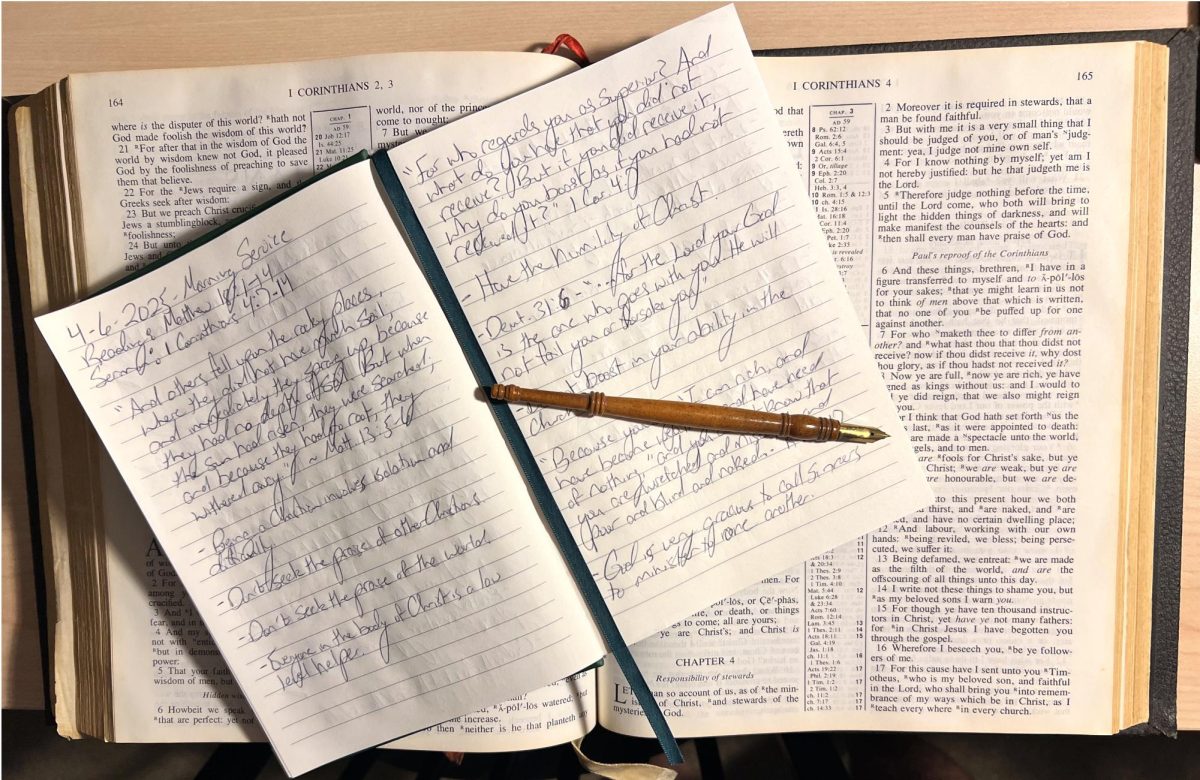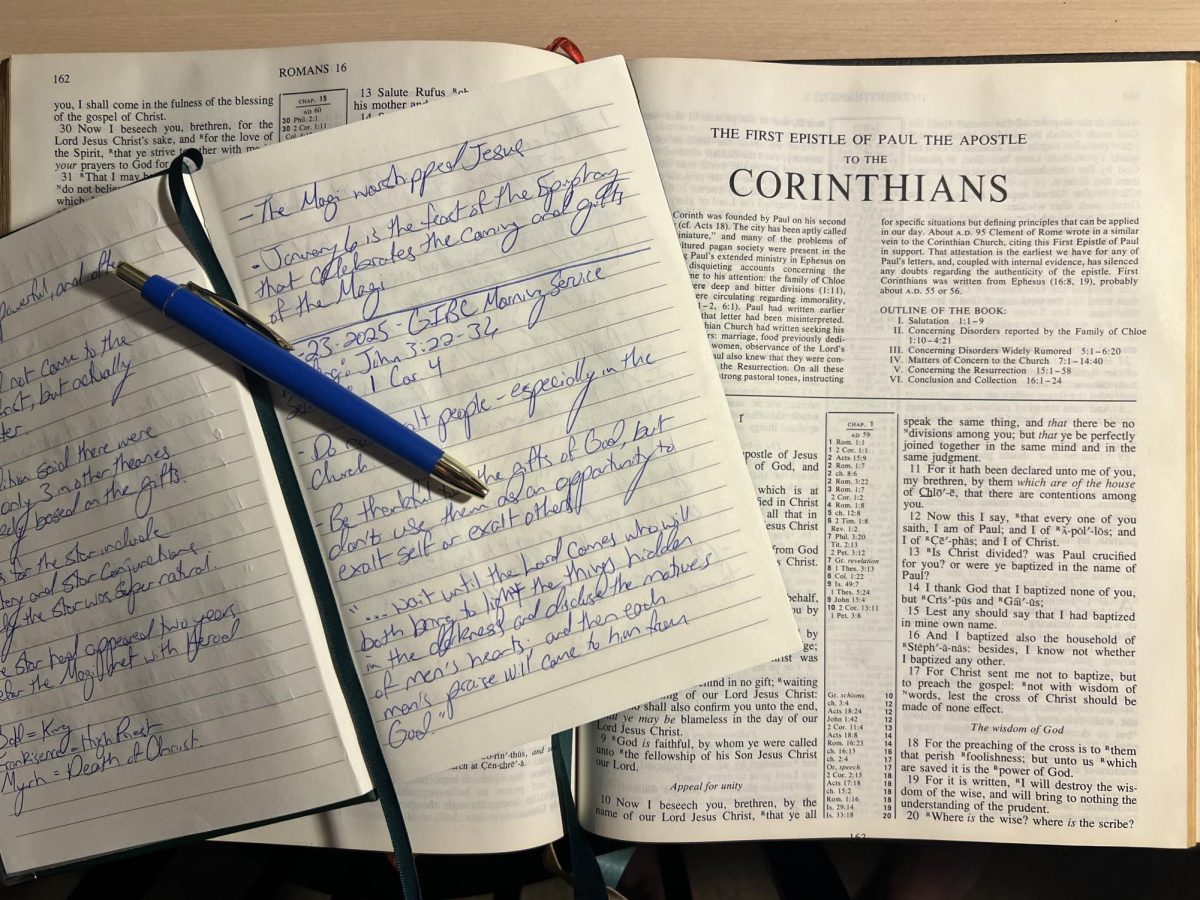





JUPITER, FLORIDA – I have never been one to write in my Bible. Somehow, it just never seemed right to me. I don’t mean it is wrong in a sinful way, and I know there are many that get a great deal out of annotating their Bibles, but for me, I have always preferred my notes to be in a separate journal, clean and easy to access and read.
Then, several months ago, I began reading the Journals of Jim Elliot, and I started annotating the text of that book – mainly because it is a very in depth publication. Jim holds nothing back in his journals, and he is very blunt about times he struggled with the scriptures. As I annotated each day’s entry, I truly felt like I was getting to know this man who has been dead since my own mother was barely a toddler. In fact, I quickly learned that Jim and I had a lot in common. In many respects, our ways of thinking are similar, and he saw the world in a way very similar to me. I have definitely lived much longer than he ever had a chance to, and I am not so sure missionary martyrdom is in my future. Even so, I began to think that if I could come to connect with a dead man so deeply just by annotating his journals, what would happen if I did something similar with the word of the Living God?
I decided to give it a try. However, though I have many Bibles at my disposal (around 30) most of them were rather expensive or have some sentimental aspect about them, so I was still reluctant to write in them. If I was to take on this project, I would need a new Bible – inexpensive and with no sentimental attachments.
Walmart to the rescue! One afternoon while shopping, I passed through the book aisle and saw they had a simple paperback New Testament for just two dollars. I bought it, brought it home, and began to annotate. My experience was profound! Things started leaping out at me from the text that I had either never noticed before or had written in some long forgotten journal entry years ago. Before I knew it, page upon page of that simple two-dollar Bible was covered in handwritten notes. There actually wasn’t much space to write in it, and within a week it was falling apart. I decided that if I was going to keep this up, I needed a Bible that would give me adequate room to write notes and anything else I needed to. I turned to the vast resources of Amazon.com and purchased an ESV Journaling Bible.
I began with the book of Matthew (in the two-dollar Bible I had started in Luke), and in annotating the very first chapter, I discovered something I had never considered before. The bulk of Chapter 1 is the genealogy of Christ, tracing all the way from Abraham to Jesus thousands of years later. A total of 42 generations are described.
For most people, genealogies are the part you usually skip past. But since I am on this new annotating kick, I decided to take a little extra time and examine what each name in the genealogy meant. What I found was remarkable: every single name in some way connects to the person of Christ. Don’t get me wrong. There were many people in Jesus’s family tree that were less-than-savory individuals. However, through each life, whether it was just by the person’s name or something about their life itself, God was pointing forward to His Son.
What follows is each name defined and analyzed as it points to the Savior. I hope this information will encourage your own study as you discover more deeply what is written in the text:
Abraham to David
- Abraham – Means “Father of a multitude.” God promised that through Abraham all nations would be blessed (Genesis 12:3), ultimately fulfilled in Christ, the promised Seed who blesses the world.
- Isaac – Means “he laughs.” Isaac was the miraculous son of promise and was offered by Abraham as a sacrifice before being figuratively “received back,” foreshadowing the Father’s offering of His beloved Son.
- Jacob – Means “heel-grabber” or “deceiver.” Though flawed, God transformed Jacob into Israel, demonstrating God’s grace in changing sinners—something fully accomplished through Christ. His second name, Israel, means “he who struggles with God” – a clear portrait of the nation of Israel for generations to come. Only Christ would truly show what it meant to submit to the Father perfectly.
- Judah – Means “praise.” Jacob prophesied that the scepter would not depart from Judah (Genesis 49:10), identifying the royal tribe from which Christ would come. Christ is due the ultimate praise!
- Perez – Means “breach” or “breaking forth.” Born under unusual circumstances, Perez demonstrates God’s ability to bring His purposes through broken situations, anticipating redemption through Christ.
- Hezron – His name may mean “enclosed.” Though little is recorded of him, he faithfully carried the Messianic line forward, showing God’s quiet preservation of His promises.
- Ram – Possibly means “high” or “exalted.” His place in the genealogy reminds us that God was steadily advancing His plan toward the exalted Messiah.
- Amminadab – Means “belonging to the prince” – a worthy name for all those belonging to the true Prince of Peace.
- Nahshon – Means “serpent” or “enchanter,” though this is uncertain. As the prince of Judah during the Exodus, he helped lead God’s covenant people, foreshadowing Christ, the greater Leader.
- Salmon – Remembered for marrying Rahab, his inclusion demonstrates God’s grace in incorporating Gentiles into the Messianic line, anticipating salvation for all nations.
- Boaz – Means “in him is strength.” As the kinsman-redeemer of Ruth, Boaz beautifully foreshadows the strength of Christ, our Redeemer who willingly purchases His bride.
- Obed – Means “servant.” His very name anticipates Christ, the Servant-King who came not to be served but to serve.
- Jesse – Means “gift” or “wealth.” From the riches of his life came King David, whose throne ultimately belongs to the Messiah – the greatest gift of all.
- David – Means “beloved.” Israel’s greatest earthly king established the royal line, and God’s covenant promised an eternal throne fulfilled only in Jesus, the Son of David.
From Solomon to the Babylonian Exile
- Solomon – Means “peace.” Though Solomon himself was far from perfect, his peaceful reign, blessed by supernatural wisdom, foreshadows the ultimate reign of Christ, the King whose kingdom will never end.
- Rehoboam – Means “the people enlarge.” His divided kingdom highlights humanity’s failure, pointing to Christ as the King who reunites God’s people and grows them all the more.
- Abijah – Means “Yahweh is my Father.” His name reflects the unique Sonship perfectly fulfilled in Jesus, who alone truly reveals the Father.
- Asa – Means “physician” or “healer.” Though Asa himself was spiritually inconsistent, his name reminds us that Christ is the Great Physician who heals sin’s deepest disease.
- Jehoshaphat – Means “Yahweh has judged.” Christ bears God’s judgment on behalf of sinners while also serving as the final Judge.
- Joram – Means “Yahweh is exalted.” Despite Joram’s wickedness, God’s covenant endured, illustrating that God’s promises rest on His faithfulness rather than human merit.
- Uzziah – Means “Yahweh is my strength.” His pride led to judgment, contrasting with Christ’s perfect humility despite possessing all power.
- Jotham – Means “Yahweh is perfect.” His relatively faithful reign points toward the truly perfect King, Jesus Christ.
- Ahaz – Means “possessor.” Though Ahaz showed that he possessed no enduring faith during the Israel-Aram attack against Judah, Christ’s showed perfect trust in the Father, and he is the true Ahaz – possessor of all things.
- Hezekiah – Means “Yahweh strengthens.” His miraculous deliverance from death anticipates God’s ultimate victory over death through Christ’s resurrection.
- Manasseh – Means “causing to forget.” Though exceedingly wicked, Manasseh’s later repentance demonstrates God’s mercy toward even the greatest sinners through Christ. As it is written in Jeremiah 31:34, “For I will forgive their iniquity, and I will remember their sin no more.”
- Amon – Means “trustworthy”, “faithful”, and “master workman” though ironically Amon was none of these things. His life underscores humanity’s need for the perfectly faithful King.
- Josiah – Means “Yahweh supports” or “healed by Yahweh.” His great reforms point to Christ, who brings true and lasting spiritual renewal.
- Jeconiah – Means “Yahweh establishes.” Though associated with exile and judgment, God’s covenant survived through him, demonstrating that God’s redemptive plan cannot be stopped.
From the Babylonian Exile to Christ
- Shealtiel – Means “I have asked God.” Living during the exile, he represents hope that God hears His people’s prayers and fulfills His promises in Christ even when they are far from home.
- Zerubbabel – Means “seed of Babylon.” He led the return from exile and rebuilt the temple, foreshadowing Christ who builds the true spiritual temple, His Church.
- Abiud – Means “my father is majesty.” Though little is known about him, his name points toward Christ, whose Father reigns in heavenly majesty.
- Eliakim – Means “God establishes.” God’s kingdom is ultimately established forever through Jesus Christ.
- Azor – Means “helper.” Christ is our true Helper and Savior.
- Zadok – Means “righteous” and “just.” Christ alone is the perfectly righteous and just High Priest and King.
- Achim – Means “God will establish.” His name echoes God’s unwavering commitment to establish His eternal kingdom through Christ.
- Eliud – Means “my God is majesty.” Christ perfectly reveals the majesty and glory of God.
- Eleazar – Means “God has helped.” Jesus is God’s ultimate help and salvation sent into the world.
- Matthan – Means “gift.” Christ is God’s indescribable gift to humanity.
- Jacob – Like the patriarch, this Jacob reminds us that God works through ordinary people to accomplish extraordinary purposes in bringing forth the Messiah.
- Joseph (the husband of Mary) – Means “may He add.” Joseph faithfully accepted his role as Jesus’ legal father, giving Christ His legal right to David’s throne while preserving the miracle of the virgin birth.
- Jesus (who is called Christ) – Means “Yahweh saves.” His very name declares His mission: “…He will save His people from their sins” (Matthew 1:21). He is the fulfillment of every promise, prophecy, and type found throughout the genealogy.
Each of these biblical figures increasingly reveal humanity’s inability to save themselves by their own righteousness. Through kings, prophets, and patriarchs both good and bad, mankind’s desperate state is revealed. Even so, each of their names and/or lives pointed to something – Someone – greater coming on the horizon. Then, finally, born in obscurity, the long-awaited Messiah arrived—not through human greatness, but through God’s sovereign grace. These truths and so many more are available in the pages of scripture – so whether you annotate you Bible or not, open its pages and breathe in the words of the One who will give you everlasting life.
References
Scripture quotations are from The Holy Bible, English Standard Version® (ESV®), copyright © 2001 by Crossway, a publishing ministry of Good News Publishers. Used by permission. All rights reserved.
Most of the name definitions were researched using Blue Letter Bible.
Photography Credit
The featured image is by Piotr from Pixabay. Used with permission. Thrive Christian Press makes no claim on this image.
This Post is Sponsored by:

Click the ad for more details.
The Believer’s Byline is a publication of Thrive Christian Press.
Copyright © 2026 David Scott Fields II. All Rights Reserved.